
Quick-Cooking Pasta: Why It Fits Modern Lifestyles?
Share Box
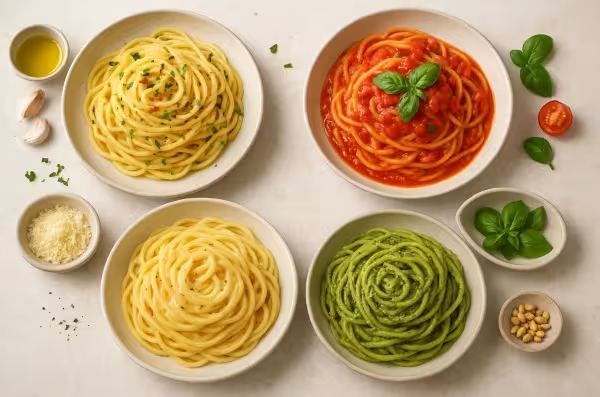

Quick-cooking pasta has become a practical solution for people who want real pasta taste without a long preparation time. As daily schedules become tighter and eating occasions more fragmented, traditional cooking methods no longer fit every scenario. This is where quick-cooking pasta creates clear value: it delivers familiar texture, balanced flavor, and reliable quality in just a few minutes.
For brands and retailers focused on convenience foods, understanding what quick-cooking pasta is—and how it differs from standard dry pasta—is crucial to developing products that truly meet modern expectations.
Table of Contents
What Is Quick-Cooking Pasta?
Quick-cooking pasta is designed to significantly reduce preparation time while maintaining the structure and mouthfeel of traditional pasta. Unlike standard dry pasta, which typically requires 8–12 minutes of boiling, quick-cooking pasta is processed to hydrate and gelatinize starch more efficiently.
This allows it to be ready in as little as 3–5 minutes using hot water or brief heating, depending on the format. In some cases, no boiling is required at all.
Key characteristics include:
- Short preparation time
- Consistent texture after rehydration
- Compatibility with cup-based or bowl-based formats
- Stable shelf life similar to dry pasta
How Quick-Cooking Pasta Is Made
The reduced cooking time is not accidental. It results from controlled processing techniques that optimize how water penetrates the pasta core.
Based on food processing research published by cereal science and pasta manufacturing studies, quicker hydration is achieved through:
- Optimized semolina granulation
- Precise moisture control before drying
- Temperature-managed extrusion
- Structured drying curves that preserve integrity
These steps allow water to reach the center of the pasta faster during preparation, without turning the product soft or mushy.
Quick-Cooking Pasta vs Traditional Dry Pasta
Understanding the difference helps position products correctly and avoid consumer confusion.
| Feature | Quick-Cooking Pasta | Traditional Dry Pasta |
|---|---|---|
| Preparation time | 3–5 minutes | 8–12 minutes |
| Cooking method | Hot water or brief heating | Continuous boiling |
| Convenience level | High | Moderate |
| Storage | Shelf-stable | Shelf-stable |
| Suitable for cups | Yes | Limited |
This comparison highlights why quick-cooking pasta is increasingly used in ready-to-eat and instant meal formats.
Why Quick-Cooking Pasta Fits Modern Eating Habits
According to recent global food consumption behavior reports, convenience-driven meals now account for a growing share of weekday eating occasions. Consumers want food that fits into work breaks, travel, and flexible schedules.
Quick-cooking pasta aligns with these patterns because it:
- Requires minimal equipment
- Reduces cleanup
- Delivers consistent results
- Supports portion-controlled formats
These advantages make it suitable for office lunches, on-the-go meals, and compact retail spaces.
Applications in Ready-to-Eat and Cup Pasta Formats
Quick-cooking pasta is especially effective in cup-based and bowl-based products. The format relies on predictable hydration and stable texture, both of which quick-cooking pasta supports well.
Common applications include:
- Pasta cups with sauce powder or liquid sauce
- Instant pasta meals requiring only hot water
- Microwave-friendly pasta bowls
- Shelf-stable ready-to-eat pasta lines
These formats depend on precision during development, as even small texture variations can impact consumer satisfaction.
Quality Considerations That Matter
Not all quick-cooking pasta performs the same. Quality depends on raw materials, processing consistency, and production standards.
High-quality quick-cooking pasta should:
- Hold shape after hydration
- Absorb sauce evenly
- Avoid surface cracking
- Maintain bite without toughness
Facilities with in-house R&D and controlled production environments are better positioned to deliver reliable results at scale.
How Haoshiduo Develops Reliable Quick-Cooking Pasta
Haoshiduo focuses on pasta products designed for modern convenience without compromising quality. With a large-scale production facility, experienced technical teams, and food safety management systems in place, the company controls the full process from formulation to finished product.
Key strengths include:
- Product development aligned with fast-preparation formats
- Flexible production for different pasta shapes and hydration speeds
- Customized packaging options for cup and ready-to-eat formats
- Stable quality supported by standardized manufacturing
This integrated approach helps ensure consistency across batches and markets.
Choosing the Right Quick-Cooking Pasta Solution
Selecting the right quick-cooking pasta depends on how and where the product will be consumed. Consider:
- Preparation method (hot water, microwave, or ready-to-eat)
- Desired texture after hydration
- Packaging format and portion size
- Shelf-life expectations
When these elements are aligned, quick-cooking pasta becomes a reliable foundation for scalable convenience products.
How to quickly cook a plate of pasta?→
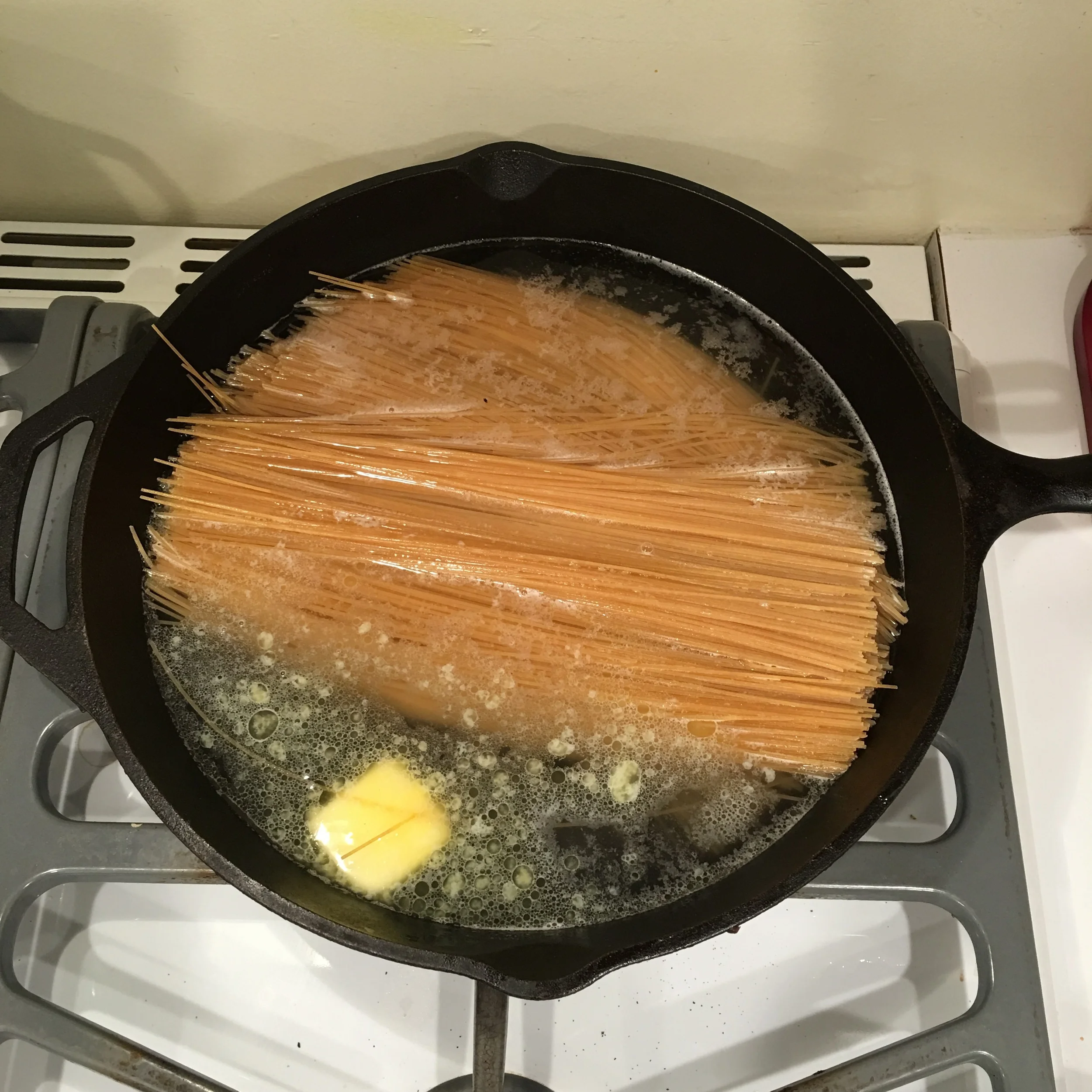
Basic cooked pasta:
- 1 package (usually about a pound) of pasta
- 1 teaspoon salt
- 1 tablespoon butter
- 4-6 cups cold water (see notes below)
The butter might not be necessary in a non-stick pan, but I am using a cast-iron pan, so I always like to have a little oil in there.
The quantity of water will vary depending on your type of pasta and your desired result. Here, a very thin angel hair pasta, and I just served it buttered, so I used only 4 cups. But for thicker pasta like penne, you will need more water, so go up to 5 cups. If you are making a sauce, then you will want to have a little water left in your pan after the pasta is fully cooked, to help blend in the sauce, so go up to 6 cups.
So – 4 cups for thin pasta, no sauce. 6 cups for thick pasta with sauce. Or adjust in between to suit your needs. As with everything, I think it’s a bit of trial and error. If your water is all absorbed but your pasta is not yet fully cooked, then add a bit more hot water.
Conclusion
Quick-cooking pasta is more than a faster alternative to traditional dry pasta. It reflects how eating habits are changing and how food products must adapt. By combining efficient preparation with dependable quality, it supports a wide range of modern food applications.
For brands seeking to expand into convenient pasta solutions, understanding the technical and functional role of quick-cooking pasta is a critical first step.
Haoshiduo offers a wide variety of pasta types, including instant, ready-to-eat pasta, traditional pasta, and quick-cooking pasta. We can also customize your order according to your needs, whether it’s the flavor or the shape.
Click here to contact us and start your pasta journey!
FAQ
What is quick-cooking pasta?
Quick-cooking pasta is pasta designed to be ready in minutes using hot water or brief heating.
How long does quick-cooking pasta take to prepare?
Most formats are ready in 3–5 minutes, depending on shape and thickness.
Is quick-cooking pasta shelf-stable?
Yes, it is typically shelf-stable like traditional dry pasta.
Does quick-cooking pasta taste different?
When properly developed, it maintains a similar texture and flavor to traditional pasta.
Is quick-cooking pasta suitable for pasta cups?
Yes, it is commonly used in cup and ready-to-eat pasta products.


 English
  Russian
  Arabic