No-Cook Pasta vs. Instant Noodles: Which Is Better for Food Brands?
Share Box
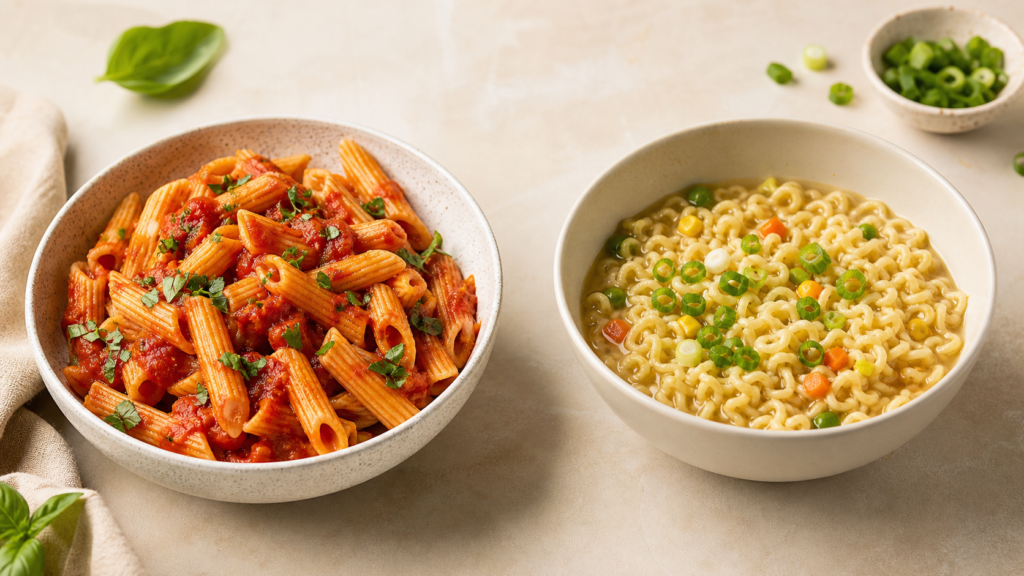
Quick answer: No-cook pasta and instant noodles both deliver fast meal preparation, but they support different product strategies. Instant noodles offer high consumer familiarity and value positioning. No-cook pasta gives food brands more room for Italian-inspired flavors, premium meal presentation, and differentiated private-label concepts. The right choice depends on the target market, channel, preparation method, price point, and product experience.
What Is No-Cook Pasta?
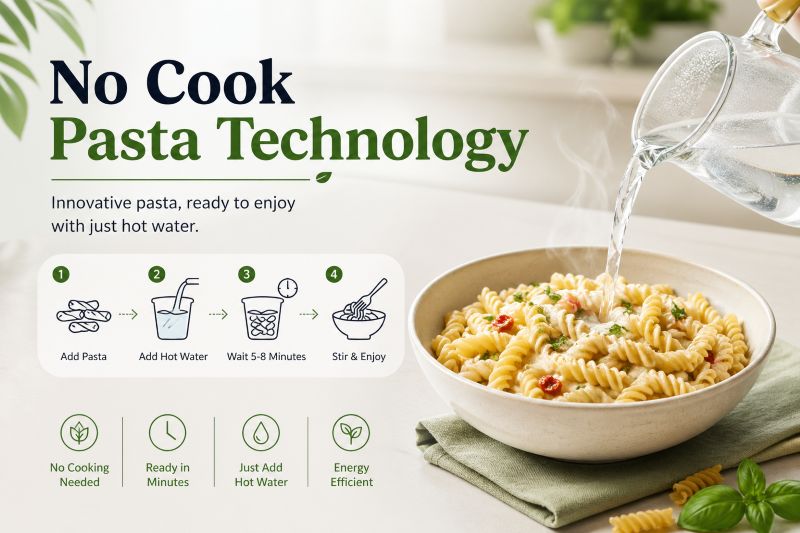
No-cook pasta is a convenience pasta product designed to be prepared without conventional stovetop boiling. Depending on the product specification, consumers may add hot water, use a microwave, or follow another simple heating method defined by the manufacturer.
A complete product may combine preprocessed pasta, a separate sauce pouch, vegetables or other toppings, a cup or bowl, and clear preparation instructions. Because the eating experience is based on pasta rather than a traditional noodle block, brands can build concepts around tomato, cheese, mushroom, black pepper, cream, or other Italian-inspired sauces.
HSD Pasta supplies no-cook pasta products and supports food businesses that need product, sauce, portion, or packaging options for their market.
What Are Instant Noodles?
Instant noodles are precooked or processed noodles made for rapid preparation with hot water or brief heating. They are commonly sold in packets, cups, bowls, and trays with powdered seasoning, oil, sauce, or dehydrated toppings.
The category benefits from broad consumer awareness, familiar preparation, and established retail demand. That familiarity can reduce the education needed at the point of sale. However, it can also make differentiation harder because buyers already face many similar products competing on flavor, price, and packaging.
No-Cook Pasta vs. Instant Noodles: Key Differences
| Decision factor | No-cook pasta | Instant noodles |
|---|---|---|
| Product identity | Italian-style convenience meal | Familiar noodle-based convenience meal |
| Typical positioning | Mid-range or premium | Value, mainstream, or premium |
| Consumer familiarity | Emerging in many markets | Very high in many markets |
| Flavor direction | Tomato, cheese, cream, mushroom, black pepper | Chicken, beef, seafood, vegetable, spicy |
| Differentiation potential | Strong for Western-style meal concepts | Possible, but competition is often intense |
| Common packaging | Cup, bowl, tray, or pouch | Packet, cup, bowl, or tray |
| Best fit | Brands seeking a distinctive pasta meal | Brands seeking familiarity and scale |
Neither category is automatically better. A successful no-cook pasta or instant noodle launch starts with the consumer occasion and works backward through taste, preparation, package design, logistics, compliance, and price.
1. Compare Taste and Texture
Texture is one of the clearest differences between no-cook pasta and instant noodles. Consumers generally expect instant noodles to be soft, flexible, and strongly seasoned. They may expect pasta to retain more bite and carry a thicker sauce.
During product development, evaluate firmness at the recommended preparation time and again after the meal has stood for several minutes. Also check sauce coverage, aroma, visible ingredients, and consistency between samples. A convenient product still needs a repeatable eating experience.
For no-cook pasta, the sauce-to-pasta ratio matters as much as the formula itself. Too little sauce may make the product feel dry; too much can weaken the pasta texture or create a messy preparation experience.
2. Match the Preparation Method to the Sales Channel
The best preparation method is the one customers can use reliably where the product is sold or consumed. A format designed for an office pantry may not work in a hotel room, outdoor setting, school, or convenience store.
- Hot-water preparation: useful where kettles or hot-water stations are common.
- Microwave preparation: practical for offices, supermarkets, and convenience stores with microwave access.
- Ready-to-heat trays: suitable when a complete meal appearance is important.
- Self-heating formats: relevant for selected outdoor or travel uses, subject to local packaging and transport rules.
Test the complete no-cook pasta process using the actual container, sauce, water quantity, wattage, and standing time. Instructions should be short, unambiguous, and validated for the destination market.
3. Decide Between Familiarity and Differentiation
Instant noodles can be a strong choice when the target consumer values affordability, familiar flavors, and fast preparation. Existing category awareness can support quicker trial, but a new product still needs a clear reason to be selected over established alternatives. A no-cook pasta launch faces a different task: explaining a less familiar format while making its meal experience immediately appealing.
No-cook pasta can be more suitable when a brand wants Italian-inspired positioning, restaurant-style sauce cues, or a Western convenience-meal concept. It may also create useful white space in retail channels where the instant noodle shelf is already crowded.
Differentiation should be visible and meaningful. Flavor, portion, preparation convenience, pack structure, and price must reinforce the same positioning rather than relying on packaging claims alone.
4. Choose Packaging for Use, Shelf Appeal, and Logistics
No-cook pasta packaging affects product protection, preparation, shelf visibility, transport cost, and consumer expectations. It should be selected after the meal format and sales channel are defined.
Cup and bowl formats
Cups and bowls can serve as both package and eating container. Cups suit compact portions and on-the-go occasions; bowls provide more space for sauce, toppings, and a meal-like presentation.
Tray and pouch formats
Trays can create a ready-meal appearance and help organize components. Pouches may reduce package volume and shipping weight, but they often require a separate serving container. Buyers should evaluate barrier performance, sealing, stackability, case packing, and damage risk—not appearance alone.
HSD Pasta’s product customization service covers relevant choices such as pasta, sauce, portion, packaging, and private-label presentation.

5. Evaluate OEM and Private-Label Potential
OEM and private-label production allow a retailer, distributor, or food brand to launch under its own brand without building a dedicated manufacturing line. The project can begin with an existing formula and customized label or move toward a more tailored product.
- Define the target consumer, market, and channel.
- Select the pasta or noodle format and portion.
- Choose a sauce or seasoning direction.
- Confirm the preparation method.
- Select the package structure and carton configuration.
- Produce samples and test the complete eating experience.
- Review ingredients, allergens, nutrition data, and label requirements.
- Approve the final specification before commercial production.
Using an existing no-cook pasta specification can reduce development work. A fully customized recipe or package may require additional sampling, validation, tooling, lead time, and minimum order quantities. Buyers can learn more in HSD Pasta’s guide to launching private-label instant pasta.

6. Review Nutrition and Label Requirements Early
Convenience meals are compared on more than taste and price. Retail buyers and consumers may examine serving size, calories, protein, fat, sodium, sugars, ingredients, and allergens. These values must come from the final approved formula rather than from a prototype or a similar product.
For products intended for the United States, the FDA’s Food Labeling Guide explains core labeling responsibilities and points manufacturers and importers to current requirements. The FDA also provides consumer-facing guidance on understanding the Nutrition Facts label.
Sodium deserves particular attention in sauce and seasoning development. The World Health Organization recommends that adults consume less than 2,000 mg of sodium per day; its sodium reduction fact sheet explains the public-health context. This does not establish a product claim: any “low sodium,” “high protein,” or similar statement must meet the rules of the destination market.
7. Confirm Shelf Life, Storage, and Shipping
Shelf life depends on formulation, processing, sauce composition, packaging barrier properties, storage temperature, and transport conditions. A general category estimate is not a substitute for data tied to the finished product.
Before ordering no-cook pasta or instant noodles, ask whether refrigeration is required, which storage temperature applies, how date codes are printed, whether every component has the same shelf life, and what test documentation is available. Importers should also check whether the package and carton can withstand the expected shipping route and climate.
8. Compare Suppliers Using the Same Criteria
A useful no-cook pasta supplier comparison goes beyond the lowest unit quotation. Request the same information from each manufacturer so that product scope, service level, and hidden costs are easier to compare.
- Available preparation methods and pasta formats
- Standard and custom sauce options
- Minimum order quantity for each configuration
- Sample process and development charges
- Packaging and multilingual label capabilities
- Quality-control checkpoints and available documentation
- Production lead time and capacity
- Export packaging and shipping support
- Change-control process after specification approval
HSD Pasta describes its manufacturing and company background on the About Us page. Procurement teams can also use the site’s guide on choosing a private-label pasta manufacturer as a due-diligence checklist.
Which Option Fits Your Business?
Choose instant noodles when consumer familiarity, value positioning, and established category demand are the main priorities. Choose no-cook pasta when the business needs a differentiated Italian-style meal, more visible sauce-led positioning, or a premium private-label concept.
Retailers can carry both if the products serve distinct occasions and price points. Hotels, offices, travel channels, and convenience stores should give extra weight to the preparation equipment available at the place of consumption.
The final no-cook pasta or instant noodle decision should be based on validated samples and a complete landed-cost model. Include product cost, packaging, carton efficiency, testing, labeling, freight, duties, storage, and expected retail margin.
Frequently Asked Questions
Is no-cook pasta the same as instant noodles?
No. Both are convenience foods, but no-cook pasta uses a pasta-style format and often pairs with Italian-inspired sauces. Instant noodles belong to a broader noodle category and commonly use seasoning powder, flavored oil, broth, or sauce.
Does no-cook pasta need to be boiled?
No-cook pasta is designed to avoid conventional stovetop boiling. The exact method depends on the finished product and may use hot water, microwave heating, or another validated preparation process.
Can no-cook pasta be sold under a private label?
Yes. Depending on manufacturing capabilities and order volume, private-label options may include flavors, portions, packaging formats, labels, logos, and carton configurations.
What should buyers test before placing an order?
Buyers should test texture, flavor, sauce coverage, preparation reliability, package usability, portion satisfaction, storage requirements, and compliance information using the final proposed specification.
Is no-cook pasta suitable for hotels and travel channels?
It can be, provided the preparation method matches the equipment available and the package is easy to store, transport, open, prepare, and dispose of in that environment.
Request a No-Cook Pasta Sample or OEM Discussion
HSD Pasta works with retailers, food brands, distributors, hotels, and other business buyers on traditional and no-cook pasta projects. Share your target market, preparation method, desired portion, flavor direction, package format, and estimated order volume so the team can recommend a suitable starting point.


 English
  Russian
  Arabic