How to Choose a Reliable Instant Pasta Supplier for Your Market
Share Box
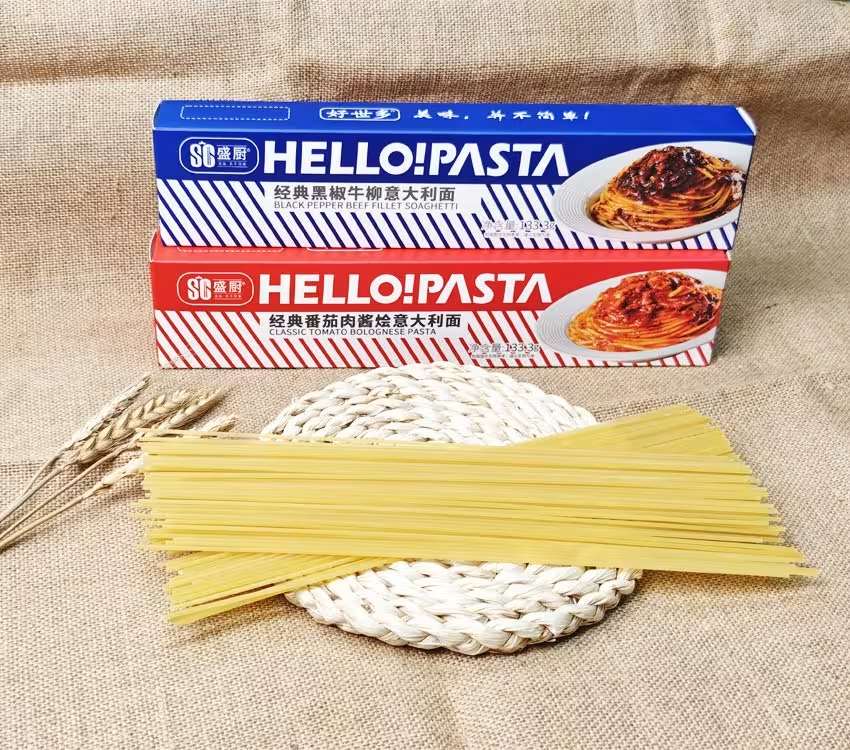
Instant pasta is becoming a practical food solution for busy consumers, retailers, foodservice operators, and private label food brands. Compared with traditional dry pasta, instant pasta is designed for faster preparation, easier storage, and more convenient meal solutions. For supermarkets, convenience stores, restaurants, distributors, and importers, choosing the right instant pasta supplier can directly affect product quality, customer satisfaction, and long-term business growth.
However, not every pasta supplier can meet the requirements of modern food businesses. A reliable supplier should provide stable quality, flexible customization, safe production, suitable packaging, and export-ready service. Before starting a cooperation, buyers need to understand what makes an instant pasta manufacturer trustworthy.
Table of Contents
Why Choosing the Right Instant Pasta Supplier Matters
Choosing an instant pasta supplier is not only about comparing prices. For food brands and distributors, the supplier becomes part of the product value chain. If the pasta quality is unstable, the packaging is weak, or the production schedule is delayed, the final brand reputation may suffer.
A professional supplier can help buyers reduce risk in several ways. They can maintain consistent texture and taste, support different market preferences, offer suitable packaging formats, and provide guidance for bulk orders or private label projects.
For importers and retailers, the right supplier also helps improve product competitiveness. Instant pasta is often purchased by consumers who value convenience, taste, and reliable quality. A supplier with strong production and customization ability can help your brand meet these expectations more effectively.
Instant Pasta Supplier vs Traditional Pasta Supplier

Not all traditional pasta suppliers are suitable for instant pasta projects. Traditional dry pasta usually focuses on standard cooking performance, while instant pasta requires faster preparation and better convenience.
Instant Pasta Requires Faster Cooking Performance
Instant pasta should be easy to prepare within a short time. Some products may only need hot water, while others are designed for quick boiling or ready-to-eat meal kits. This requires a supplier to have experience in formula control, drying process, moisture management, and texture stability.
Instant Pasta Needs Better Packaging Compatibility
Instant pasta is often sold in cups, bowls, pouches, trays, or retail packs. The packaging must protect the pasta during transportation and storage. It should also support easy consumer use. A good supplier should understand both pasta production and packaging requirements.
Instant Pasta Often Needs OEM or Private Label Support
Many buyers do not only want standard products. They may need customized shapes, flavors, seasoning packs, serving sizes, and branded packaging. This is why a supplier with custom pasta products capability can be more valuable than a basic manufacturer.
Check the Supplier’s Product Range
A reliable instant pasta supplier should offer more than one standard product. Different markets may prefer different pasta types, serving sizes, textures, and preparation methods.
For example, some retailers may need instant pasta cups for convenience stores. Some distributors may prefer family-size quick cooking pasta packs. Foodservice buyers may need bulk pasta that can reduce kitchen preparation time. Private label brands may want unique flavors or packaging styles to stand out on the shelf.
When evaluating a supplier, check whether they can provide:
| Product Type | Suitable Market |
|---|---|
| Instant pasta cups | Convenience stores, supermarkets, office meals |
| Quick cooking pasta | Retail packs, family meals, foodservice |
| Ready-to-eat pasta meals | Meal kits, convenience channels, private label |
| Dry pasta products | Distributors, restaurants, wholesale buyers |
| Customized pasta shapes | Brand differentiation and OEM projects |
| Pasta with seasoning packs | Retail meal solutions and fast preparation |
A wider product range usually means the supplier has better production flexibility and can support different business models.
Evaluate Production Capacity and Quality Control
For B2B buyers, production capacity is one of the most important factors. A supplier may provide good samples, but if they cannot maintain stable quality during mass production, the cooperation may become risky.
Stable Production Capacity
Before placing a large order, buyers should understand whether the supplier can handle regular production volume. For distributors and retailers, supply stability is critical. A delayed shipment can affect store availability, seasonal promotions, and customer trust.
Consistent Texture and Taste
Instant pasta must maintain good texture after preparation. If the pasta becomes too soft, sticky, or uneven after cooking, consumers may not repurchase it. A professional supplier should control raw materials, processing time, drying method, and packaging conditions.
Food Safety Management
Food safety is essential in pasta manufacturing. Buyers should ask about production hygiene, raw material control, inspection procedures, and quality documentation. For general food safety reference, buyers can also review guidance from the U.S. Food and Drug Administration when evaluating supplier standards and compliance awareness.
A reliable supplier should be able to explain how they control production quality instead of only showing product photos or price lists.
Review OEM and Private Label Instant Pasta Support
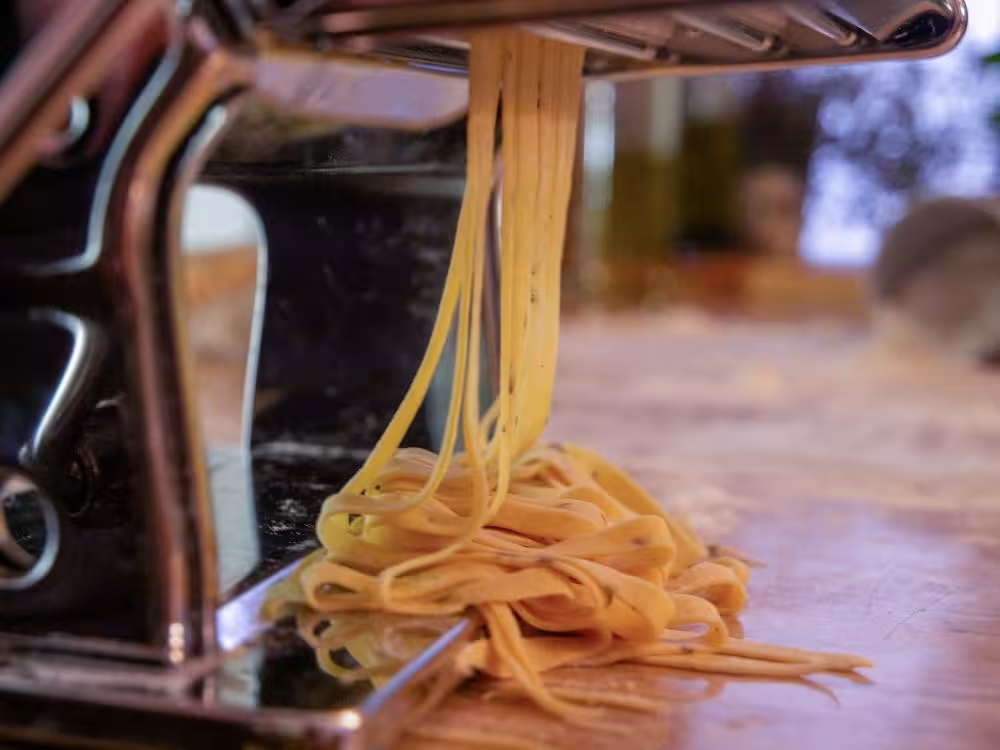
For many food brands, private label instant pasta is more attractive than buying generic products. Private label cooperation allows the buyer to create a unique product under their own brand.
A capable OEM pasta supplier should support several customization options.
Customized Formula
Different markets have different flavor and nutrition preferences. Some consumers prefer classic tomato sauce, while others prefer cheese, mushroom, spicy, curry, or regional flavors. Some brands may want healthier formulas with lower fat, higher fiber, or added protein.
Customized Pasta Shape
Pasta shape affects cooking performance, sauce absorption, appearance, and consumer experience. Short-cut pasta, spiral pasta, macaroni, and other shapes can be used for instant meal solutions depending on the packaging and preparation method.
Customized Packaging
Packaging is a key part of instant pasta success. Buyers may need cups, bowls, bags, boxes, or multi-pack formats. A supplier with OEM experience can help match packaging with product positioning, shelf display, transportation, and consumer convenience.
Branding and Label Support
Private label projects often require branded packaging, product descriptions, nutrition information, and market-specific labeling. A good supplier should understand that packaging is not only a container but also a sales tool.
Compare Packaging Options for Instant Pasta
Packaging can strongly affect product sales. Even if the pasta quality is good, poor packaging may reduce shelf appeal or cause damage during shipping.
Instant Pasta Cups
Instant pasta cups are suitable for convenience stores, offices, schools, travel, and quick meals. They are easy to display and simple for consumers to use. This format is ideal for single-serving products.
Pouches and Bags
Pouches and bags are usually suitable for family packs, refill packs, and cost-effective retail options. They are lighter and may reduce packaging costs compared with cups or bowls.
Bowls and Trays
Bowls and trays are often used for more complete ready-to-eat pasta meals. They can include pasta, sauce, seasoning, vegetables, or protein options. This format is useful for premium convenience meals.
Bulk Packaging
Bulk packaging is suitable for restaurants, catering companies, and food factories. For foodservice buyers, bulk instant or quick cooking pasta can help reduce kitchen preparation time and improve operational efficiency.
Consider Market Positioning Before Choosing a Supplier
Before selecting an instant pasta supplier, buyers should define their target market clearly. A product for supermarkets may be different from a product for restaurants or convenience stores.
For Retail Brands
Retail brands need products with strong shelf appeal, clear packaging, stable taste, and suitable serving sizes. The supplier should help create products that are easy for consumers to understand and purchase.
For Convenience Stores
Convenience stores need fast, compact, and easy-to-prepare products. Instant pasta cups or bowl products are usually more suitable for this channel.
For Foodservice Operators
Restaurants, cafes, catering companies, and institutional kitchens may focus more on preparation efficiency, bulk supply, and consistent texture. Quick cooking pasta can help reduce labor time and improve service speed.
For Importers and Distributors
Importers need suppliers who understand export packaging, shipping stability, documentation, and long-term cooperation. Product consistency and communication efficiency are especially important.
Ask About Minimum Order Quantity and Lead Time
MOQ and lead time are practical issues that every buyer should confirm early. Some suppliers may be suitable for large distributors but not flexible enough for new brands. Others may offer customization but require longer development time.
Before confirming an order, buyers should ask:
- What is the MOQ for standard instant pasta?
- What is the MOQ for private label packaging?
- How long does sample development take?
- How long does mass production take?
- Can the supplier support repeat orders?
- Can packaging be adjusted for different markets?
Clear communication helps avoid misunderstanding and makes the cooperation smoother.
Check Export Experience and Communication Ability
For international buyers, export experience is very important. A supplier should understand basic export procedures, shipping requirements, product documents, and packaging protection.
Communication ability also matters. A good supplier should respond clearly, explain product options, and provide practical suggestions instead of only sending a price. For buyers building a new product line, supplier communication can directly affect project efficiency.
A professional instant pasta manufacturer should be able to explain the manufacturing process, product differences, packaging choices, and customization steps in a way that helps buyers make decisions.
Instant Pasta Supplier Checklist for Buyers
Before choosing a supplier, buyers can use the following checklist:
| Evaluation Point | What to Check |
|---|---|
| Product range | Instant pasta, quick cooking pasta, dry pasta, cups, pouches, bulk options |
| Quality control | Texture, taste, raw materials, inspection process |
| Customization | Formula, flavor, shape, packaging, private label support |
| Production capacity | Stable supply, repeat orders, lead time |
| Packaging ability | Retail packaging, foodservice packaging, export protection |
| Communication | Fast response, clear quotation, practical suggestions |
| Export support | Documents, shipping experience, market adaptation |
| Long-term value | Product development ability, flexibility, reliability |
This checklist can help buyers avoid choosing a supplier based only on low price.
Common Mistakes When Choosing an Instant Pasta Supplier
Some buyers focus too much on the lowest price. This can be risky because lower prices may come with unstable quality, weak packaging, poor communication, or limited customization.
Another common mistake is ordering without testing samples. Instant pasta should be tested for taste, texture, preparation time, packaging strength, and shelf appeal before mass production.
Some buyers also ignore market fit. A product that works well in one country may not be suitable for another market. Flavor preference, portion size, packaging style, and price level should all match the target customers.
Conclusion: Build a Better Instant Pasta Business with the Right Supplier
Choosing a reliable instant pasta supplier is an important step for retailers, distributors, foodservice operators, and private label brands. A good supplier should offer stable quality, flexible product options, strong packaging support, and practical OEM service.
Instead of looking only at price, buyers should evaluate production capacity, quality control, customization ability, packaging formats, lead time, and export experience. These factors can help reduce risk and improve long-term business results.
Instant pasta is more than a convenient meal. With the right supplier, it can become a competitive product line for modern food markets. Whether you need instant pasta cups, quick cooking pasta, ready-to-eat meal solutions, or private label pasta products, working with a capable manufacturer can help your brand launch faster and grow with confidence.


 English
  Russian
  Arabic