
Optimal Dry Pasta for Restaurants, Catering & Retail
Share Box


Dry pasta remains a cornerstone ingredient for restaurants, convenience stores, ready-meal brands, catering services, and OEM partners. Its versatility, long shelf life, and consistent quality make it an indispensable option for operators seeking efficiency, scalability, and profitability. As consumer demand for high-quality meals with quick preparation increases, dry pasta offers a reliable solution across multiple channels.
Our expertise in producing no-cook pasta, quick-cooking pasta, dry pasta, and low-fat meat products ensures that partners receive high-quality ingredients, tailored for commercial and retail applications.
Table of Contents
Advantages of Dry Pasta for Foodservice
Dry pasta provides numerous operational and culinary benefits for restaurants, catering services, and retail operators.
Long Shelf Life and Storage Efficiency
Properly packaged dry pasta can last 18–24 months, significantly reducing delivery frequency and storage challenges. Its durability makes it ideal for bulk dry pasta supply in large-scale kitchens, catering operations, and convenience store chains.
Consistent Quality Across Batches
High-quality dry pasta ensures uniform shape, texture, and cooking performance. This consistency is crucial for restaurants, meal kit brands, and OEM projects where menu standardization and predictable outcomes are essential.
Versatility in Menu Development
Dry pasta can be incorporated into hot entrees, cold pasta salads, ready-meal kits, and portion-controlled meal cups. Its adaptability supports a wide variety of sauces, proteins, and flavor profiles, allowing operators to innovate while maintaining operational efficiency.
Operational and Cost Advantages
Dry pasta reduces preparation time, simplifies batch cooking, and minimizes waste. It requires minimal storage space and has lower spoilage risk compared to fresh or refrigerated pasta, offering cost-effectiveness for bulk procurement.
Consumer Appeal
With increasing health-conscious trends, dry pasta serves as a reliable base for meals that can be combined with lean proteins, vegetables, and low-fat sauces. It supports balanced menus for schools, hospitals, and institutional catering.
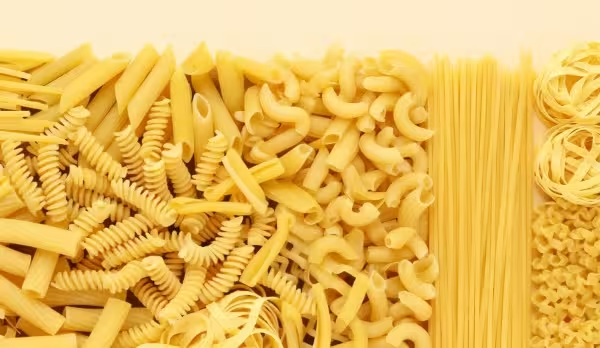
Popular Dry Pasta Shapes for Commercial Use
Different pasta shapes cater to specific culinary and operational needs.
| Pasta Shape | Best Use | Cooking Time | Notes |
|---|---|---|---|
| Spaghetti | Classic entrees, sauces | 8–10 min | Ideal for marinara or bolognese |
| Penne | Baked dishes, ready-meals | 10–12 min | Holds sauces well, suitable for bulk prep |
| Fusilli | Pasta salads, hot bowls | 10–11 min | Twisted shape captures dressing |
| Macaroni | Cheese-based dishes, casseroles | 8–9 min | Works in high-volume catering |
| Rotini | Single-serve meal kits | 9–11 min | Excellent for portion-controlled ready-meals |
These shapes support menu flexibility for restaurants, catering, and OEM private-label applications.
How Dry Pasta Supports Efficient Operations
Dry pasta addresses key operational challenges for foodservice, retail, and meal production:
Restaurants and Cafés
- Reliable ingredient for high-turnover dishes
- Supports consistent portioning and texture
- Enables faster batch cooking
Convenience Stores and Grab-and-Go Meals
- Maintains texture after microwave heating
- Fits perfectly in ready-meal cups and multi-serve trays
- Simplifies inventory management and meal prep
Meal Kit Brands and Ready-Meal Manufacturers
- Easy to portion for single-serve and family-size kits
- Compatible with multiple sauce types and protein options
- Maintains quality during transport and reheating
Catering and Institutional Kitchens
- Supports high-volume cooking with minimal supervision
- Provides predictable results across large batches
- Reduces preparation errors and waste
OEM and Private-Label Production
- Custom pasta shapes, portion sizes, and packaging
- Enables development of proprietary pasta products
- Supports co-manufacturing for private-label brands

How to Cook Dry Pasta Efficiently
Cooking dry pasta efficiently is crucial to ensure consistent results across locations and production scales.
- Use sufficient water with appropriate salt content for flavor and texture
- Stir occasionally to prevent sticking
- Monitor shape-specific cooking times
- Drain and portion immediately for hot service or ready-meal assembly
- Pair with pre-portioned sauces for consistency
Quick Cooking Reference Table
| Pasta Shape | Standard Cooking Time | Ideal Application | Notes |
|---|---|---|---|
| Spaghetti | 8–10 min | Classic entrees | Al dente texture maintained |
| Penne | 10–12 min | Baked dishes | Holds sauce and reheats well |
| Fusilli | 10–11 min | Pasta salads, hot bowls | Great for grab-and-go meals |
| Macaroni | 8–9 min | Cheese dishes, casseroles | Suitable for catering and ready-meals |
| Rotini | 9–11 min | Portion-controlled kits | Perfect for single-serve meals |
Following these guidelines helps maintain the quality and texture expected by customers.
Storage and Handling Tips
Proper storage ensures maximum shelf life and consistent quality:
- Store in a cool, dry environment
- Avoid moisture exposure
- Rotate stock to maintain freshness
- Use airtight containers when repackaging
These practices help maintain high-quality pasta for bulk supply and OEM projects.
Choosing a Reliable Supplier
Selecting the right supplier is critical for operational success:
- Production Capacity: Ensure consistent output to meet growing demand
- Food Safety Standards: Certified quality management systems are essential
- Customization Options: Shapes, sizes, portioning, and packaging flexibility
- R&D Support: Product development, recipe innovation, and quality improvement
- OEM/Private-Label Services: Support for co-manufacturing and packaging
A reliable partner ensures product consistency, operational efficiency, and successful menu or product launches.
Conclusion
Dry pasta is more than a pantry staple—it’s a strategic ingredient that drives efficiency, consistency, and profitability for restaurants, convenience stores, catering services, meal kit brands, and OEM partners. Its versatility, long shelf life, and operational advantages make it essential for modern commercial kitchens and ready-meal production.
By leveraging high-quality dry pasta and tailored OEM solutions, operators can streamline operations, enhance product offerings, and meet rising consumer expectations for convenience, taste, and quality.
FAQ
What is dry pasta?
Dry pasta is dehydrated pasta that can be stored for extended periods and cooked to al dente texture when needed.
How long does dry pasta take to cook?
Cooking times range from 8–12 minutes depending on shape.
Can dry pasta be used in ready-meals?
Yes, it retains texture and quality after portioning, reheating, and packaging.
Are customization options available?
Yes, shapes, portion sizes, and packaging formats can all be tailored.
Why choose dry pasta over fresh pasta for commercial kitchens?
Dry pasta offers longer shelf life, consistent cooking performance, operational flexibility, and cost efficiency.


 English
  Russian
  Arabic