
Instant Pasta Manufacturing Process: How Modern Convenience Pasta Is Produced
Share Box
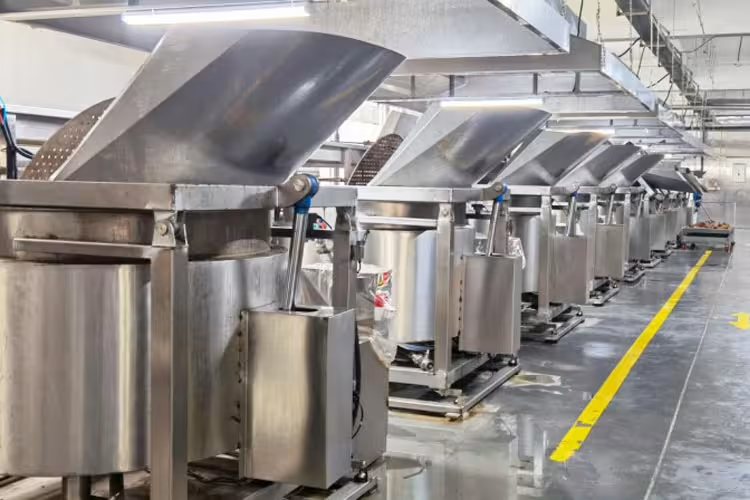
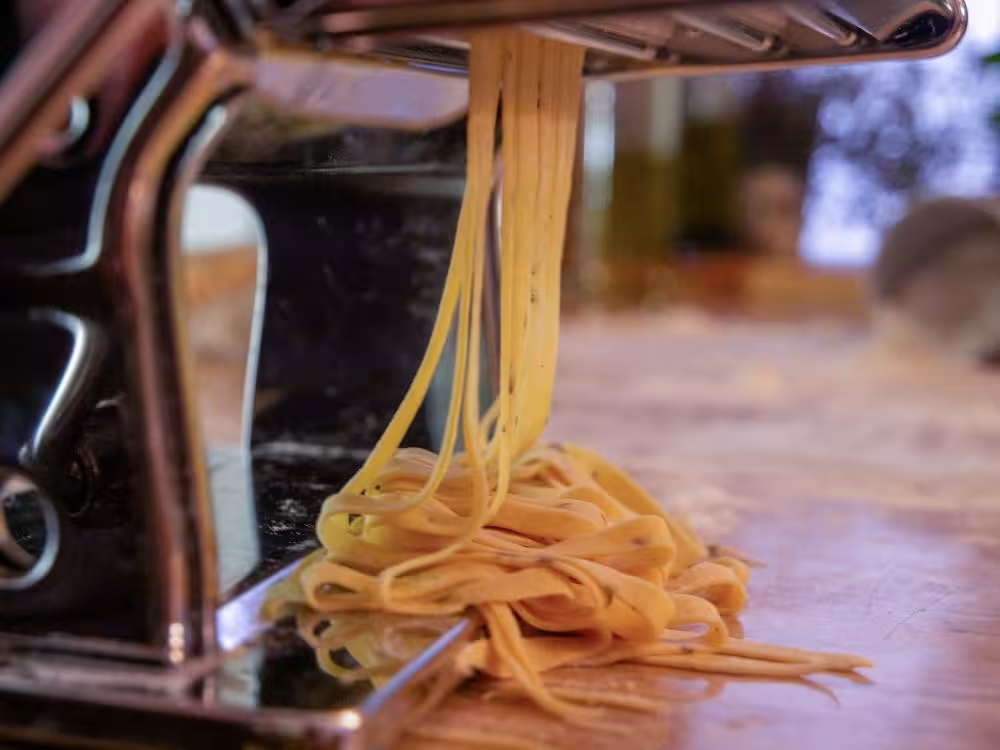
As demand for convenient meals continues to rise worldwide, instant pasta has become an increasingly important category within the food industry. Consumers now expect pasta products that are fast to prepare, easy to store, and consistent in quality. To meet these expectations, manufacturers rely on advanced instant pasta manufacturing processes that combine traditional pasta-making principles with modern food engineering technologies.
Unlike conventional dried pasta, instant pasta is specifically designed for rapid hydration and minimal preparation time. This requires precise control over raw materials, thermal processing, drying systems, and structural engineering. Understanding how instant pasta is manufactured provides insight into the innovation behind today’s convenience food market.
Table of Contents
What Is Instant Pasta?
Instant pasta refers to pasta products that can be prepared significantly faster than traditional pasta. In many cases, preparation requires only hot water or brief heating. This convenience is achieved through specialized manufacturing processes that partially pre-cook and modify the pasta structure before packaging.
Instant pasta is commonly used in:
- Pasta cups
- Ready-to-eat meals
- Shelf-stable convenience foods
- Travel and emergency meal systems
Its growing popularity reflects changing consumer preferences toward fast and efficient meal solutions.
Raw Materials Used in Instant Pasta Manufacturing
The manufacturing process begins with careful raw material selection. Ingredient quality directly affects texture, hydration speed, and product stability.
The primary ingredients typically include:
- Durum wheat semolina
- Wheat flour
- Water
- Functional starches
- Protein enhancers in some formulations
Additional ingredients may be added depending on product goals:
- Hydrocolloids for texture stabilization
- Vegetable powders for nutrition and color
- Emulsifiers for process consistency
The balance between starch and protein is especially important because it influences the pasta’s structural integrity during rapid hydration.
Dough Mixing and Hydration Control
After ingredient selection, the dry ingredients are combined with water in industrial mixers. Moisture distribution must be carefully controlled to achieve consistent dough properties.
Key process parameters include:
- Water absorption rate
- Dough temperature
- Mixing time
- Moisture uniformity
Improper hydration can negatively affect extrusion performance and final texture quality.
Extrusion Technology in Instant Pasta Production
Extrusion is one of the most critical stages in instant pasta manufacturing. During this step, dough is forced through specially designed dies that shape the pasta into forms such as spaghetti, penne, or macaroni.
Modern extrusion systems control:
- Pressure
- Temperature
- Screw speed
- Dough density
These factors influence:
- Surface smoothness
- Internal microstructure
- Mechanical strength
- Water absorption capability
For instant pasta, extrusion conditions are often optimized to create a more porous structure that improves rapid rehydration.
Pre-Cooking and Starch Gelatinization
One of the defining characteristics of instant pasta manufacturing is the pre-cooking stage. Unlike traditional dried pasta, instant pasta undergoes partial thermal treatment before final drying.
During pre-cooking:
- Starch granules absorb water and gelatinize
- Protein structures denature and reorganize
- Internal texture softens
This process significantly reduces future preparation time for consumers.
The degree of starch gelatinization must be precisely controlled. Excessive cooking can weaken structure, while insufficient cooking reduces hydration efficiency.
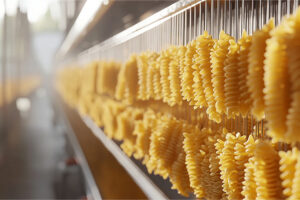
Advanced Drying Technology
Drying is a critical stage that determines shelf life, texture stability, and rehydration performance.
Several drying methods are used in instant pasta manufacturing:
Hot Air Drying
The most common industrial method, using controlled temperature and airflow to gradually remove moisture.
Multi-Stage Drying
Different temperature zones optimize structural stability while minimizing cracking.
Vacuum Drying
Reduces oxidation and helps preserve flavor and color.
Freeze Drying
Used in premium or specialized instant pasta applications where texture retention is critical.
The objective is to achieve low moisture content while maintaining structural integrity and rapid water absorption capability.
Rapid Hydration Engineering
A major goal of instant pasta manufacturing is achieving fast and uniform hydration during preparation.
Manufacturers optimize:
- Pore distribution
- Surface area
- Internal capillary channels
These structural characteristics allow hot water to penetrate the pasta quickly, reducing preparation time to just a few minutes.
Hydration efficiency is one of the key performance indicators in instant pasta product development.
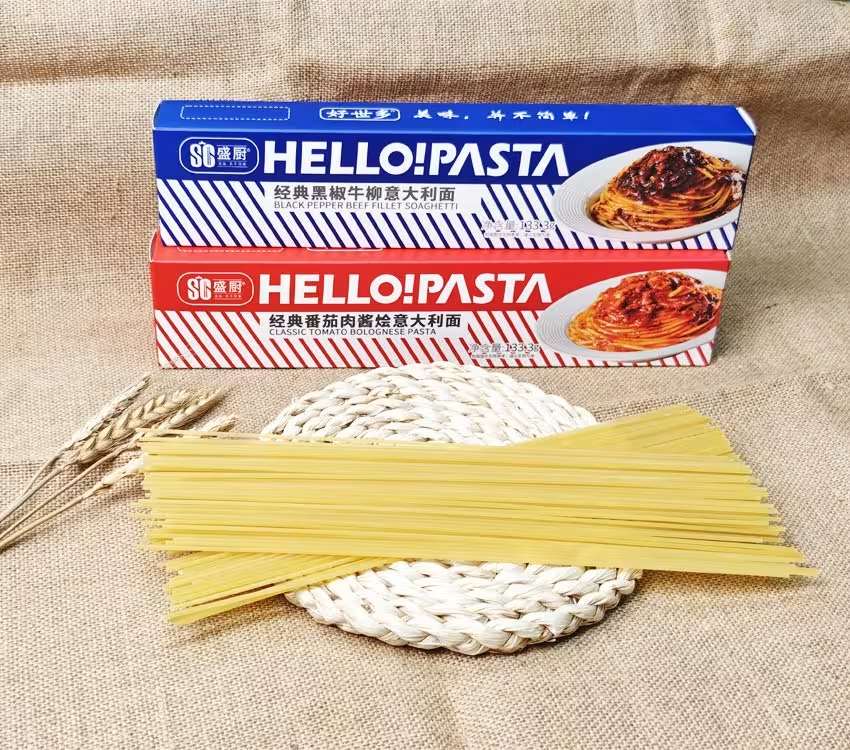
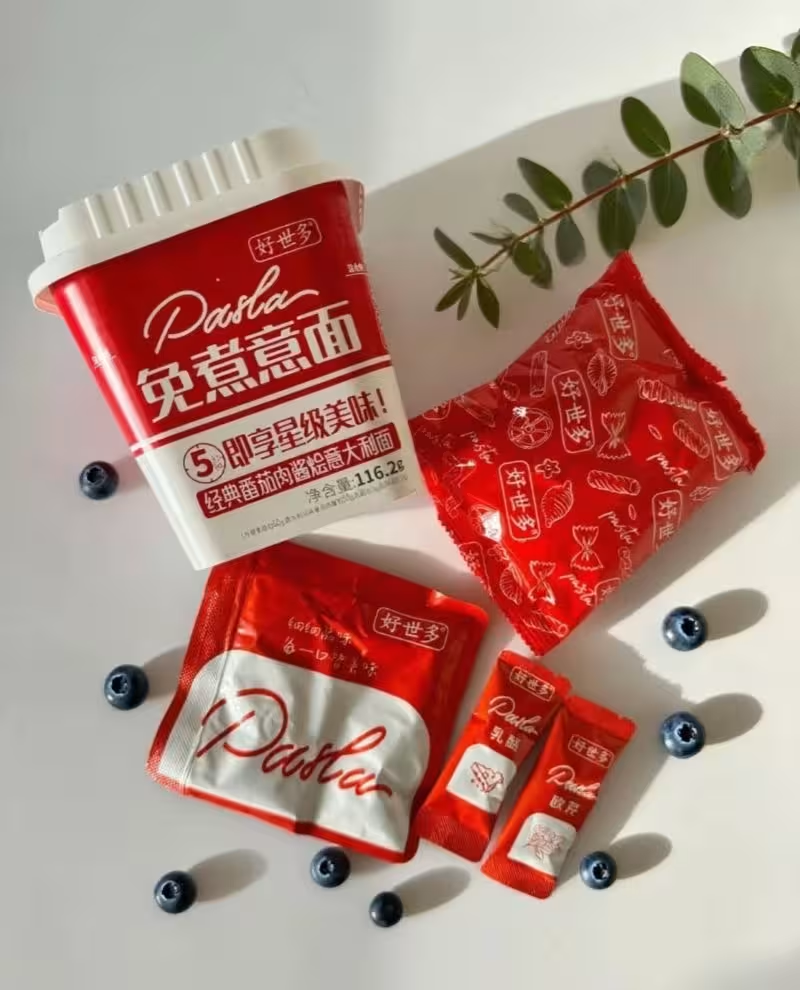
Sauce Integration and Flavor Technology
Many instant pasta products include integrated sauces or seasoning systems. Flavor technology plays an important role in overall consumer acceptance.
Common approaches include:
- Powdered seasoning sachets
- Oil-based flavor systems
- Freeze-dried vegetable inclusions
- Encapsulated seasoning technology
Advanced flavor systems help improve consistency, shelf stability, and taste release during hydration.
Packaging Systems for Instant Pasta
Packaging is essential for product protection, convenience, and shelf life.
Modern instant pasta packaging systems focus on:
- Moisture resistance
- Oxygen barriers
- Portion control
- Portability
Common formats include:
- Cup packaging
- Bowl packaging
- Flexible pouches
- Multi-component meal trays
Packaging design also influences consumer perception and purchasing behavior.

Quality Control in Instant Pasta Manufacturing
Strict quality control systems are required throughout the production process.
Manufacturers monitor:
- Moisture content
- Texture consistency
- Hydration time
- Microbiological safety
- Packaging integrity
Automated systems and digital monitoring technologies are increasingly used to improve production consistency and efficiency.
Nutritional Optimization in Modern Instant Pasta
Today’s consumers increasingly demand healthier convenience foods. As a result, manufacturers are improving nutritional profiles through:
- High-protein formulations
- Whole grain ingredients
- Reduced sodium seasoning systems
- Fiber enrichment
These innovations help align instant pasta products with health-conscious consumer trends.
Instant Pasta vs Traditional Pasta Manufacturing
| Parameter | Instant Pasta | Traditional Pasta |
|---|---|---|
| Pre-Cooking | Yes | No |
| Hydration Speed | Rapid | Slow |
| Processing Complexity | High | Moderate |
| Preparation Time | 3–5 minutes | 8–12 minutes |
| Structural Design | Porous | Dense |
This comparison highlights the additional engineering required to produce instant pasta products.
Challenges in Instant Pasta Production
Despite technological advancements, manufacturers still face several challenges:
- Maintaining al dente texture after rapid hydration
- Preventing structural collapse during storage
- Balancing convenience with nutritional quality
- Optimizing flavor retention over long shelf life
Continuous research and development are helping improve product performance in these areas.
Future Trends in Instant Pasta Manufacturing
The future of instant pasta manufacturing is likely to focus on:
- Sustainable production methods
- AI-assisted process control
- Clean-label ingredient systems
- Functional nutrition formulations
- Improved sensory performance
As convenience food demand continues growing, innovation in instant pasta technology is expected to accelerate.
Conclusion
The instant pasta manufacturing process combines food science, thermal engineering, extrusion technology, and advanced drying systems to create products that meet modern consumer expectations for convenience and efficiency.
Through innovations in rapid hydration, structural engineering, and packaging technology, manufacturers have transformed pasta into a highly versatile convenience food category.
As the industry continues evolving, instant pasta manufacturing will remain a key area of innovation within the global food sector.
FAQ
What makes instant pasta different from regular pasta?
Instant pasta is partially pre-cooked and engineered for rapid hydration.
How is instant pasta manufactured?
It involves extrusion, pre-cooking, drying, and rapid hydration optimization.
Why does instant pasta cook faster?
Its porous structure allows water to penetrate more quickly.
Is instant pasta fully cooked during production?
It is usually partially pre-cooked before drying and packaging.
What industries use instant pasta technology?
It is widely used in convenience foods, ready meals, and pasta cups.



 English
  Russian
  Arabic